Beauty formulation
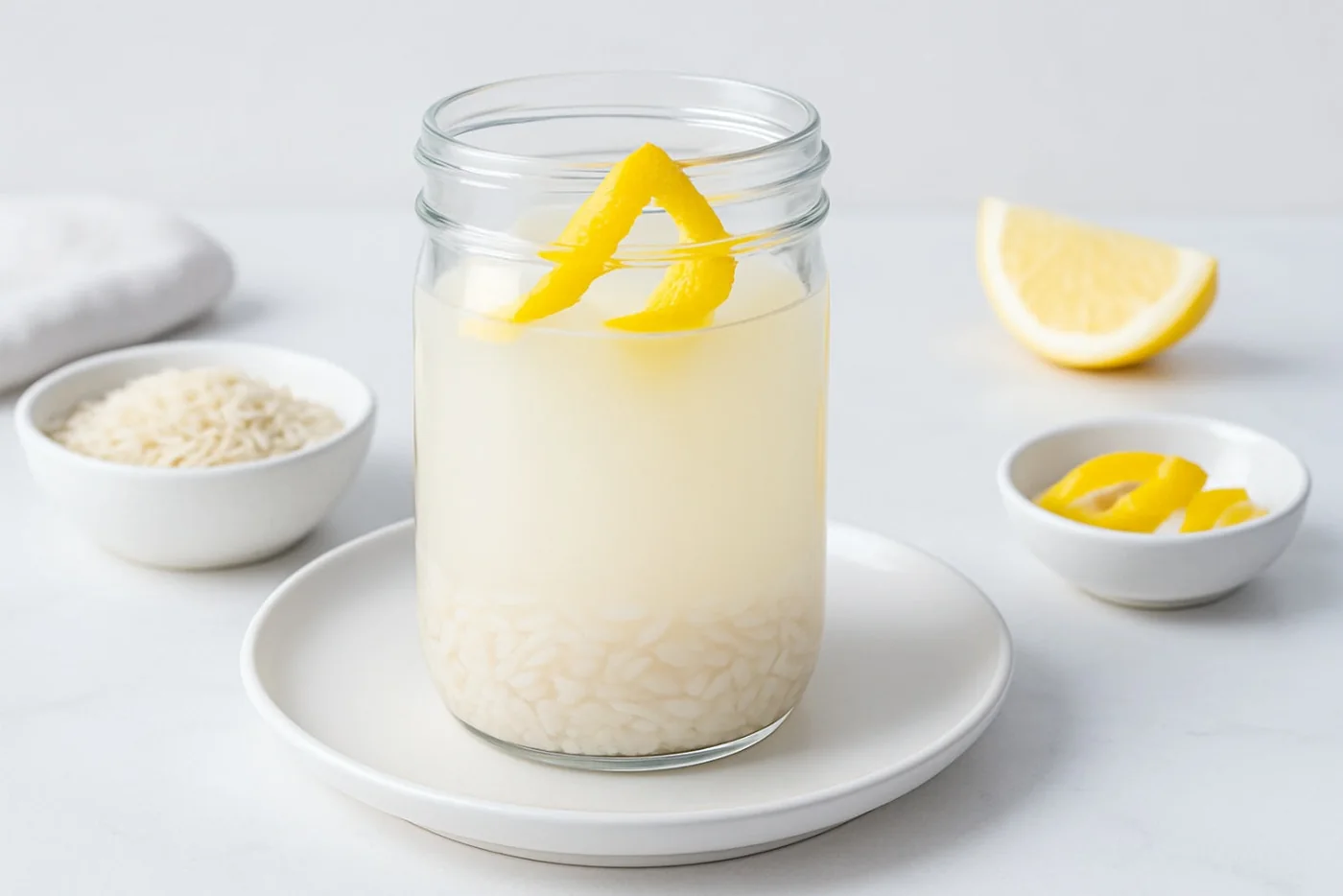
Traditional Rice Water Hair Rinse
This is the only true fermentation recipe in the entire book, and it's included specifically because fermentation changes rice water's chemistry in a meaningful way: the process increases the concentration of amino acids, vitamins, and antioxidants compared to plain rice water, which is why traditional rice-water hair rinsing (documented for centuries across East and Southeast Asia) specifically favors the fermented version.
By Aunesty Janssen · The Big Book of Milk & Garden Beauty: 156 Natural Recipes for Skin & Hair Using Alternative Milks & Everyday Pantry Ingredients
Ingredients
- Phase A (Grain & Extraction Phase)
- ½ cup (100g) Uncooked Organic White or Jasmine Rice
- 2 cups (480 mL) Distilled Water
- Phase B (Aromatic / pH Adjuster)
- 1 tbsp (15 mL) Fresh Lemon Juice or Citrus Peel
Method & application
- Rinse uncooked rice under cold running water in a fine strainer to remove surface dust.
- Place cleaned rice into a glass jar and add 2 cups of distilled water. Swirl and knead rice gently with clean hands until the water turns milky white.
- Strain rice solids out, reserving the liquid.
- Cover the jar loosely and let the reserved rice water sit at room temperature (20°C–22°C) for 12 to 24 hours to ferment slightly.
- Once a faint sour aroma develops, stir in citrus peel/lemon juice, cap tightly, and refrigerate to stop fermentation.
- APPLICATION
- After shampooing, pour fermented rice water over wet scalp and hair lengths.
- Massage scalp for 3 minutes and distribute evenly down hair shafts.
- Leave on for 5–10 minutes, then rinse thoroughly with cool water.
Kitchen note
Trust your nose over the clock: the difference between properly and over-fermented rice water is a faint, pleasant sourness versus a sharp, unpleasant one. Check at the 12-hour mark and every few hours after.
Culinary Library
Member guidance is protected.
This recipe includes premium technique notes, troubleshooting, substitutions, storage guidance, or member variations.