Beauty formulation
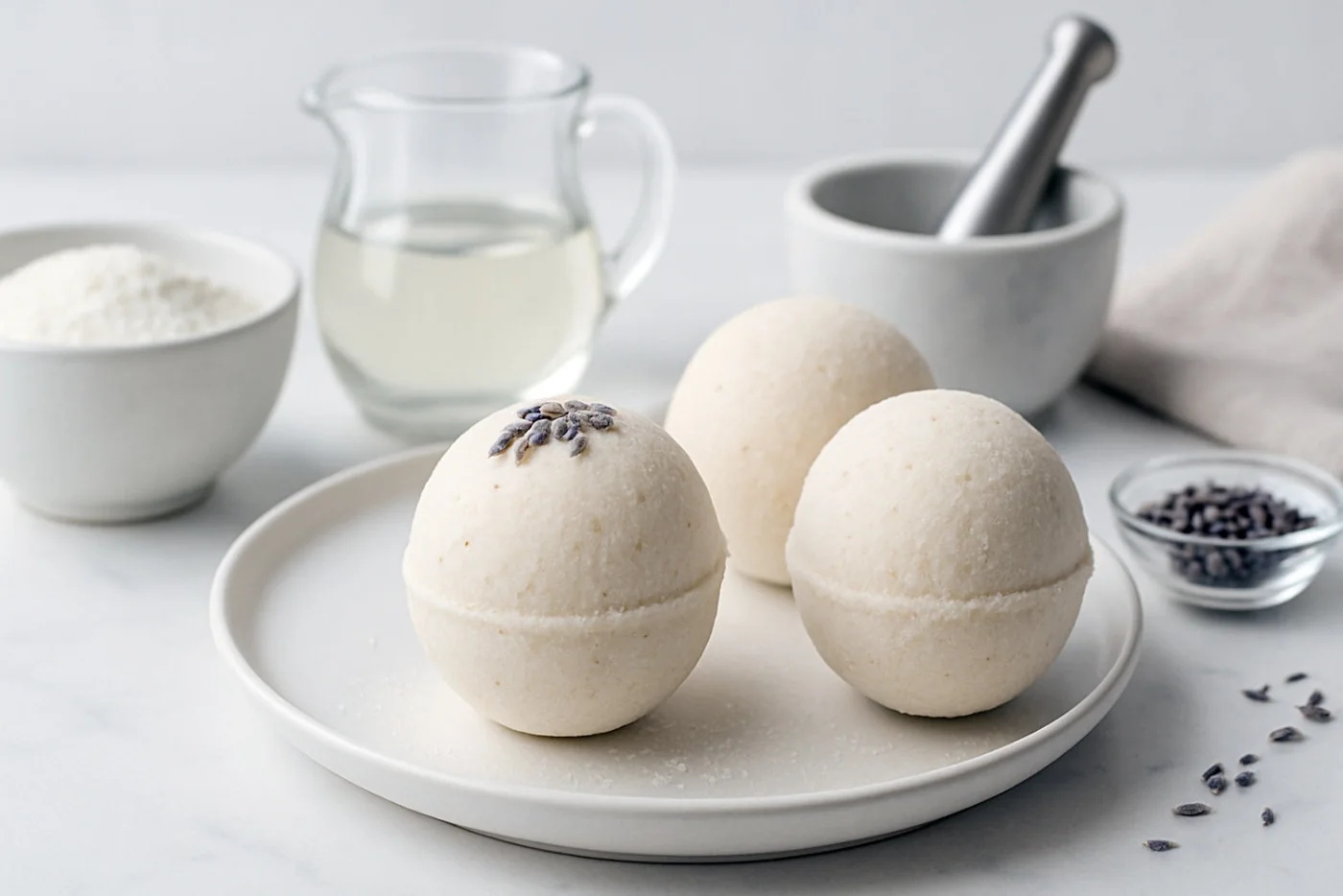
Goat Milk Bath Bomb
The fizzing reaction is baking soda (a base) and citric acid reacting the moment they contact water, releasing carbon dioxide gas, this is why moisture control during mixing is the single most important variable in this recipe.
By Aunesty Janssen · The Big Book of Milk & Garden Beauty: 156 Natural Recipes for Skin & Hair Using Alternative Milks & Everyday Pantry Ingredients
Ingredients
- Phase A (Dry Phase)
- 1 cup (220g) Baking Soda (Sodium Bicarbonate)
- ½ cup (110g) Non-GMO Citric Acid
- ¼ cup (30g) Goat Milk Powder
- Phase B (Wet Phase)
- 2 tbsp (30 mL / 28g) Melted Coconut Oil
- 10 drops Lavender Essential Oil
Method & application
- In a large bowl, sift baking soda, citric acid, and goat milk powder together; whisk thoroughly.
- In a small cup, mix melted coconut oil and essential oil.
- Crucial step: very slowly add the wet oil mixture into the dry ingredients drop-by-drop while constantly kneading with gloved hands. (If it fizzes, you are adding liquid too fast.)
- Check texture: it should feel like damp beach sand and hold its shape when squeezed. (If too dry, spritz once with witch hazel.)
- Pack mixture firmly into bath bomb mold halves, overfilling slightly, and press tightly together.
- Gently tap and remove top mold. Allow bath bombs to dry undisturbed for 24 hours.
- APPLICATION
- Drop one bath bomb into a full tub of warm bathwater. Watch it fizz and dissolve, transforming water into a creamy moisturizing bath. Soak for 20 minutes.
Kitchen note
Work in a low-humidity room (not the bathroom, and never right after a shower has been run), this single environmental factor causes more failed bath bombs than any ingredient ratio issue.
Culinary Library
Member guidance is protected.
This recipe includes premium technique notes, troubleshooting, substitutions, storage guidance, or member variations.