From the kitchen
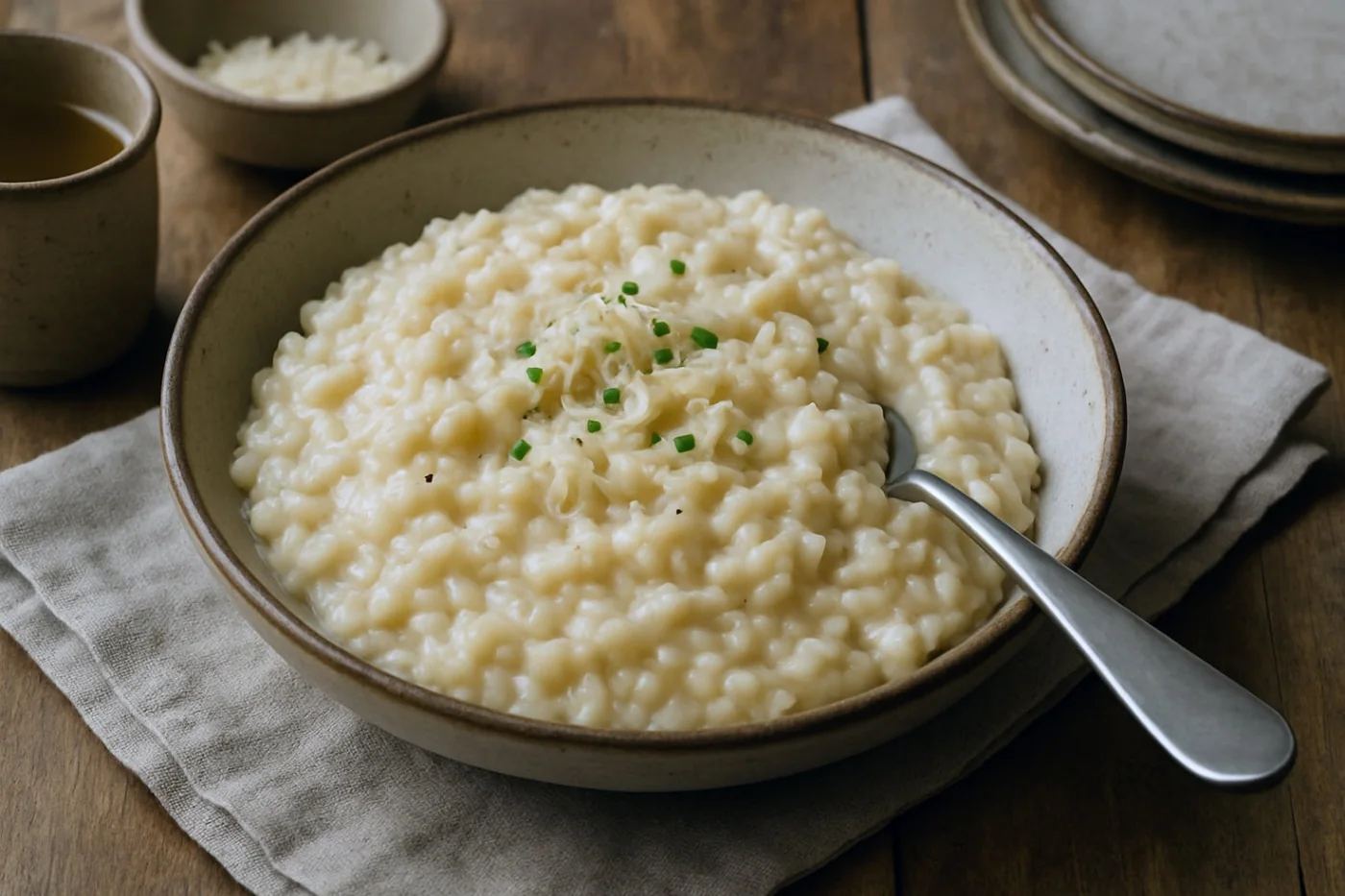
Camel Milk Risotto
Classic risotto finished with camel milk stirred in at the very end for maximum creaminess.
By Aunesty Janssen · The Complete Camel Milk Guide & Cookbook: A Definitive Guide to History, Science, Sourcing & 150 Original Recipes
Ingredients
- 4 to 5 cups low-sodium vegetable stock, plus more if needed
- 2 tbsp olive oil
- 1 small onion, finely chopped
- 1 1/2 cups Arborio rice
- 1/2 cup dry white wine
- 3/4 cup pasteurized camel milk, warm
- 1/2 cup grated Parmesan
- 2 tbsp butter
- 1/4 tsp fine salt, plus more to taste
- 1/4 tsp black pepper
Method
- Keep stock hot in a separate saucepan. Heat oil in a wide heavy pan and cook onion 5 minutes until translucent.
- Add rice and stir 1 to 2 minutes until edges look slightly translucent. Add wine and stir until nearly absorbed.
- Add hot stock about 1/2 cup at a time, stirring often and adding more when the pan looks creamy rather than dry. Cook 20 to 30 minutes until grains are tender with a slight central bite. Use extra stock as needed.
- Warm milk separately. Off heat, stir it into rice with Parmesan and butter.
- Taste and season. The risotto should spread softly on a plate; add hot stock if it stands in a stiff mound. Serve immediately.
Cook with confidence
Before you start
Before you start
Stock quantity is a starting range, not a fixed guarantee. Rice brand and pan width affect absorption. Do not rinse Arborio, because its surface starch helps form the sauce.
Serving and keeping
Refrigerate in shallow containers within 2 hours for up to 3 days. Reheat to 165°F with stock.
Toast the Rice
After onion softens, cook Arborio in olive oil 1 to 2 minutes until the grain edges look translucent. Then add 1/2 cup wine and let it absorb before the first stock ladle.
Ladle by Ladle
Add more stock only when the previous addition is mostly absorbed. Stir often but not violently. The goal is suspended starch with intact grain centers.
Culinary Library
Member guidance is protected.
This recipe includes premium technique notes, troubleshooting, substitutions, storage guidance, or member variations.