From the kitchen
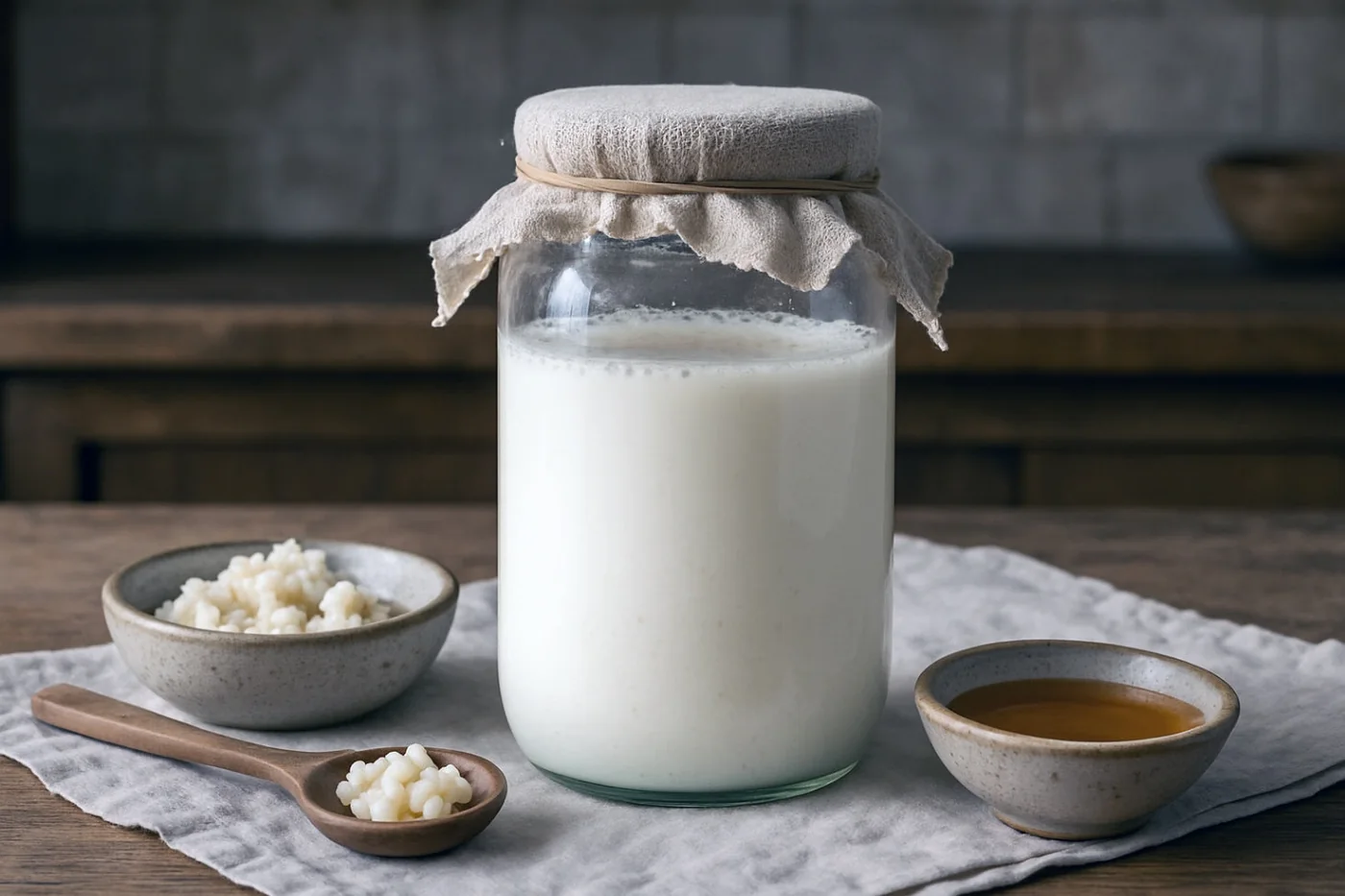
Camel Milk Kefir
A tangy fermented camel-milk drink prepared with active milk-kefir grains under controlled culture instructions.
By Aunesty Janssen · The Complete Camel Milk Guide & Cookbook: A Definitive Guide to History, Science, Sourcing & 150 Original Recipes
Ingredients
- 4 cups fresh pasteurized camel milk
- 2 tbsp active milk-kefir grains, or supplier’s specified dose for 4 cups
- 1 tbsp honey, optional at serving
Method
- Use a clean 1 1/2-quart glass jar and active food-grade milk-kefir grains from a reputable supplier. Bring fresh pasteurized milk to the supplier’s recommended fermentation temperature, generally 68 to 75°F.
- Add grains at their supplied dose for 4 cups milk, typically 2 tablespoons. Cover with a clean breathable cover secured firmly.
- Ferment out of sunlight at the supplier’s specified temperature for 18 to 24 hours. Check acidity with a suitable calibrated pH meter or food-range strips; aim for pH 4.6 or below within the recommended window.
- If it fails to acidify on schedule, discard rather than leaving it indefinitely. Thin texture alone does not indicate failure in camel milk.
- Strain through a clean food-safe fine strainer, reserve grains according to supplier care directions and refrigerate kefir promptly.
- Add honey only to the serving portion, if desired.
Cook with confidence
Before you start
Before you start
Use milk-kefir grains, not water-kefir grains. Camel-milk compatibility and grain maintenance vary, so follow the supplier’s instructions. Fermentation is a controlled culture process, not an unrestricted room-temperature soak.
Serving and keeping
Refrigerate at 40°F or below and use within 3 to 5 days, or the supplier’s shorter limit. Discard if fermentation history is uncertain.
Do Not Seal Airtight
Use a breathable cover during fermentation. After straining grains, refrigerate the finished kefir in a closed container.
Separate Weak Culture From Soft Texture
A successfully acidified camel kefir may remain thin. Check acidity before judging thickness. If acidification fails within the supplier’s window, discard the milk and follow supplier directions for recovering or replacing the grains. Unexpected mold, color or spoilage signs also call for disposal.
Culinary Library
Member guidance is protected.
This recipe includes premium technique notes, troubleshooting, substitutions, storage guidance, or member variations.